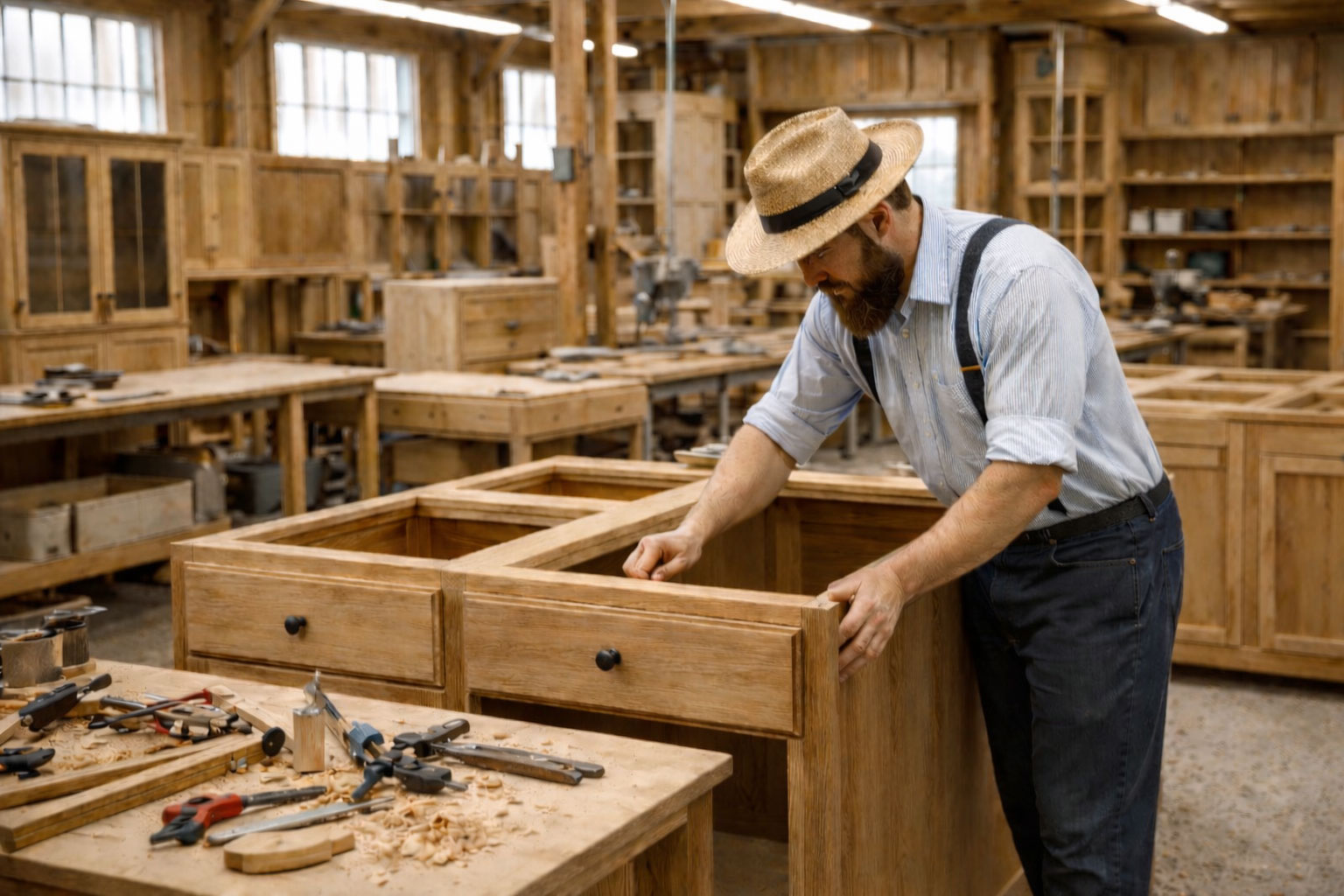
In the dim years when the Shadow lay long across the lands, there dwelt in a burrowed hill a hobbit named Beldo Carrowhand, whose joy was in wood and the patient fitting of joint to joint. While the great tales spoke of armies and kings, Beldo concerned himself with quieter labors: the shaping of cabinet doors from applewood, the burnishing of hinges until they shone like pale gold in lamplight. His workshop smelled of shavings and beeswax, and there he worked with a gentle stubbornness, believing that order and craft were small lights that even the Dark could not wholly quench.
Yet times were lean, and cupboards do not sell themselves, not even those as fair as Beldo’s. Under the reign of Mordor, roads were watched and markets thinned, and folk bought only what they must. Still, Beldo packed his wares upon a stout little cart and set out, for a cabinet well-made was a promise: that meals would be kept, letters saved, and small treasures hidden from prying eyes. He spoke softly to wary buyers in half-ruined towns, praising the steadiness of oak shelves and the way a drawer would slide home as snug as a hobbit in his bed, even when fear made hands tremble.
There were nights when the red glow in the east dimmed his courage, and he wondered whether such careful work mattered at all. But each time a door closed true, without rattle or complaint, Beldo felt again the old certainty. Empires rose and fell, he thought, but someone must still make places to keep the things worth keeping. And so, with saw and plane and an unbroken heart, the hobbit furniture maker went on, selling cabinets in the shadow of Mordor, believing that one day they would stand in sunlit rooms, long after the darkness had passed.